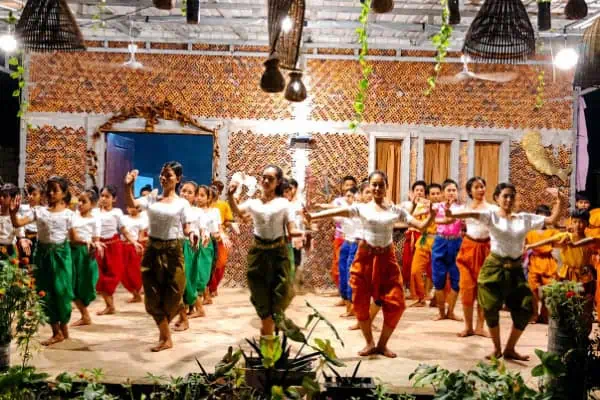
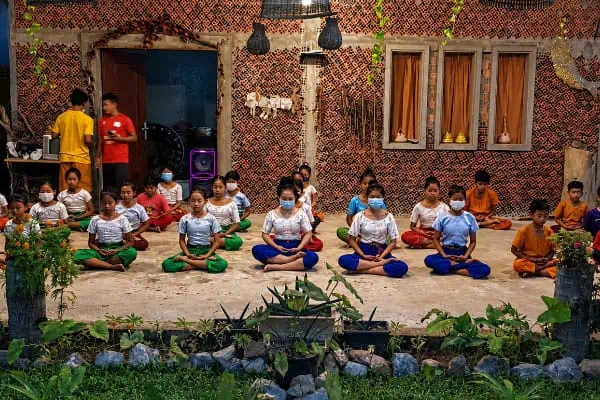
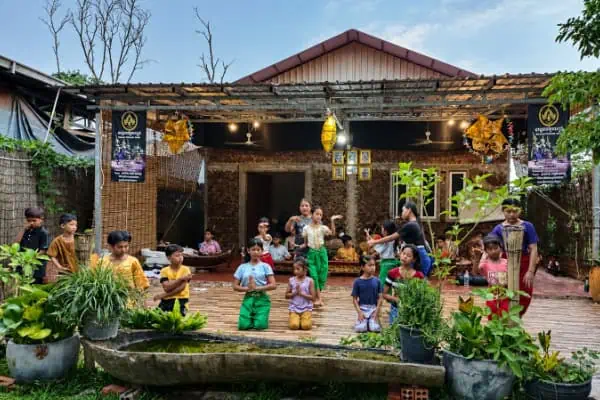
Once upon a time, there were two dancers from a traveling company getting lost in the jungle. They then reached a small fisher’s village of Kanell, located nearby the river.
To get on with their journey, the two dancers had played the Mekhala dance, known as the story of the lightning’s origin. Because of that, a real storm took place and from there, the world of men and Gods started to telescope.
Some monkeys who had been following the two dancers began to invavillage, so Bokators, the peasant warriors tried to chase them away. Since Kanell’s doors were being protected by Bokators, the monkeys decided to build a bridge across the river between their jungle and the
village. Unfortunately, the Gods interfered.
The Goddess of the river destroyed the bridge, which perturbated her water world. Meanwhile, Hanuman also tried to help the monkeys in their fight against the fishes.
Between dances, fights and jokes of the monkeys, here comes Kanell in a surprising whirlwind!
Khmer Traditional Music
Experience the rhythm and soul of Cambodia through Khmer Traditional Music, where drums, gongs, flutes, and ancient melodies guide the atmosphere of the performance. Rooted in heritage and storytelling, each instrument adds its own voice to the scene, creating moments of energy, emotion, and cultural beauty that bring the world of Kanell to life.
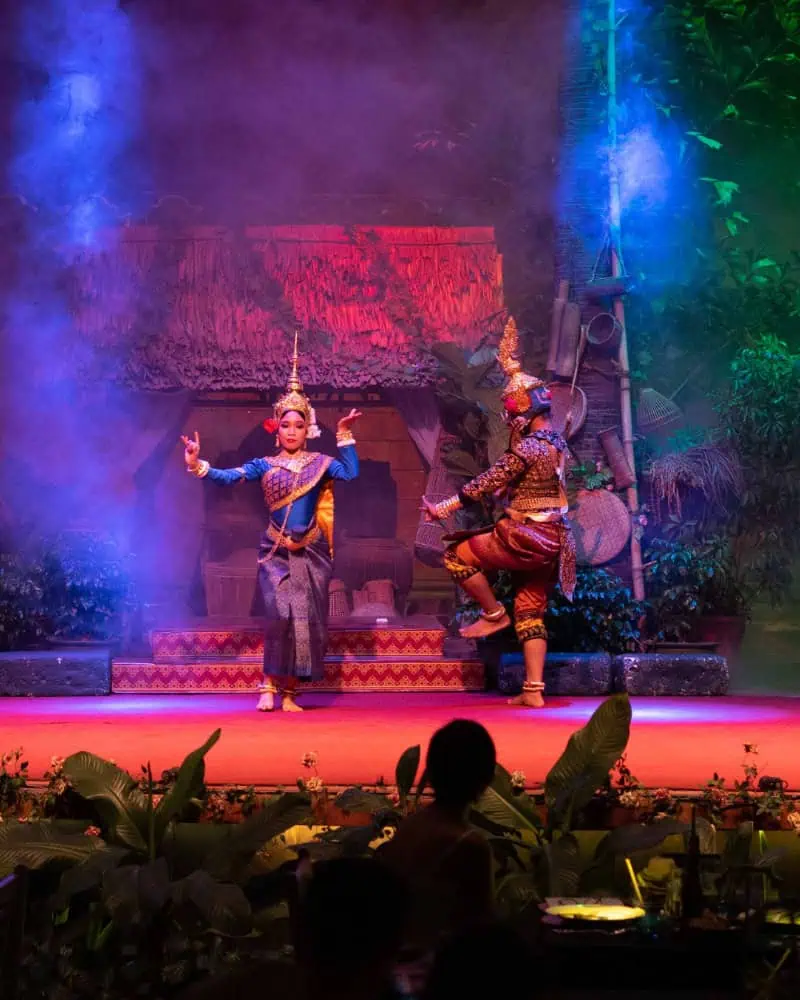
Mani Mekhala Dance
The Mekhala dance is a myth about the origin of thunderstorms and lightning. 2 students, the giant and Mekhala studied with the same master. After the training, the teacher gave 1 magic object each : the giant got an ax and Mekhala received a bright crystal ball, which is very powerful and brilliant. The giant was very envious and wanted the crystal ball, so he tried to throw an ax to kill the Mekhala, while Mekhala threw back the glass to resist and the 2 objects were colliding and became thunderstorms and lightning flashing up on the sky. At last, the giant had lost, gave up and accepted his defeat.
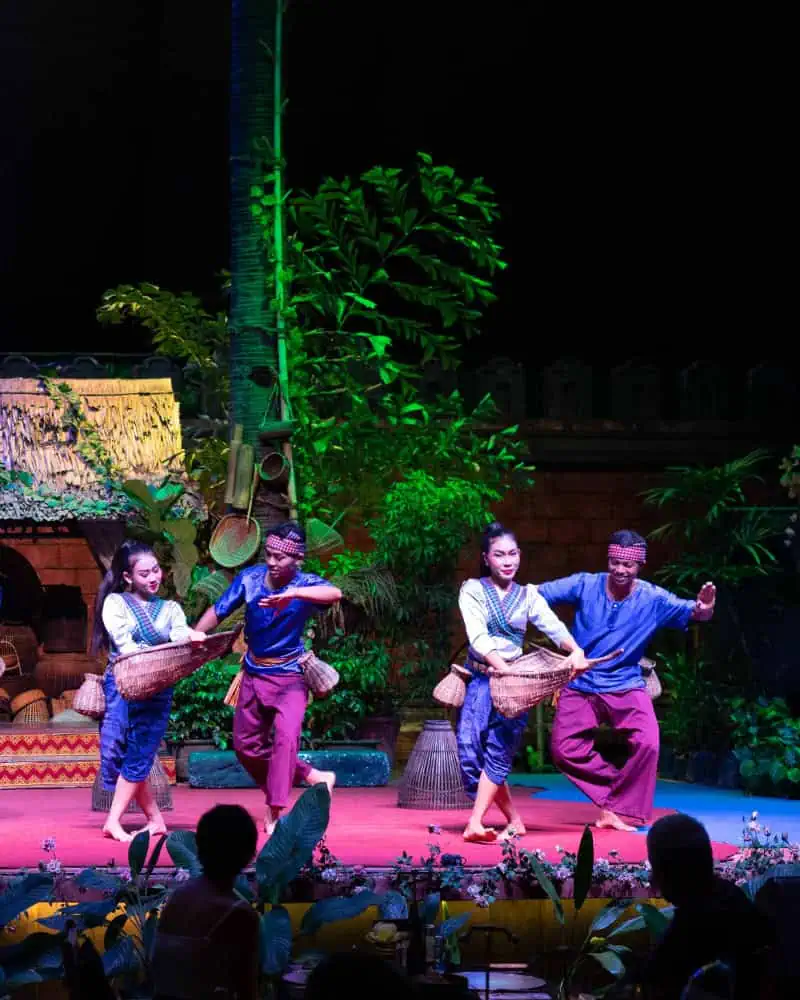
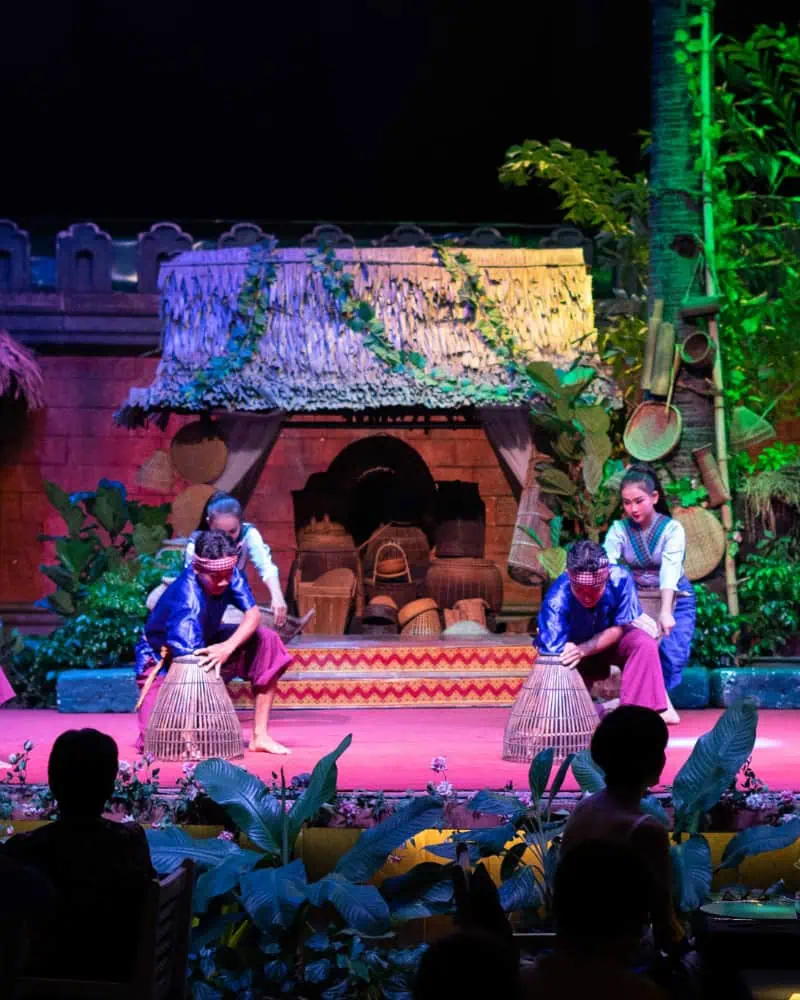
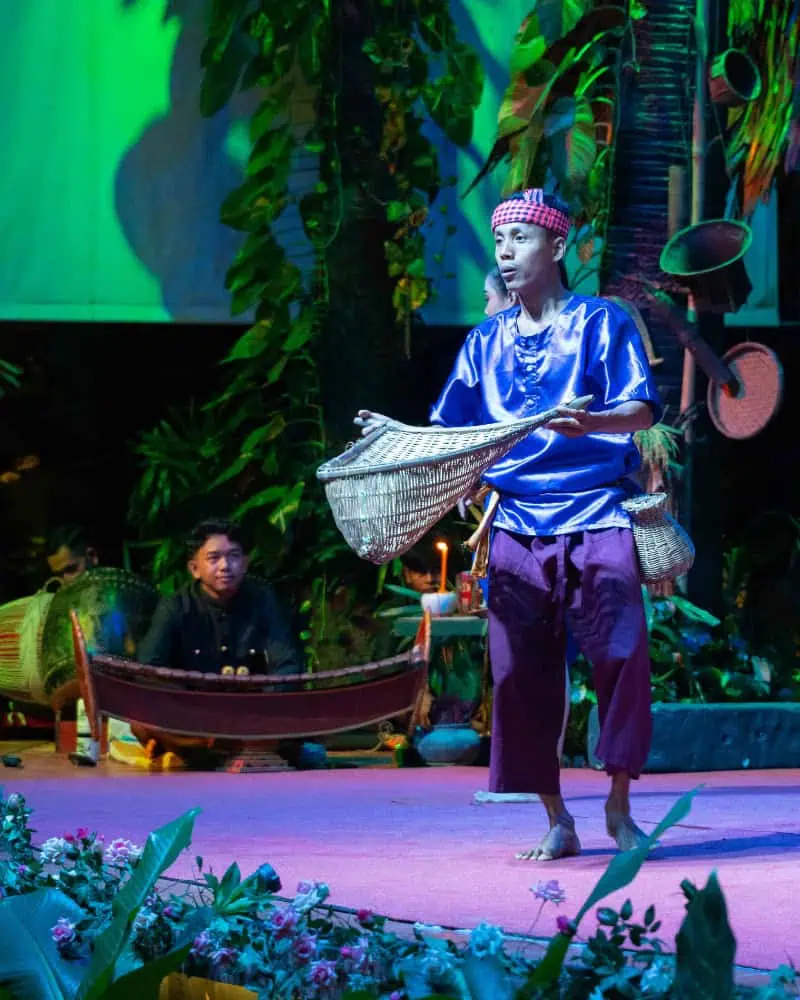
Fishing Dance
“Where there is water, there is fish”, we say this quite often in Cambodia, and it appears to be true. During the rainy season, it is common to see fishes on the road, literally crossing the road with their fins when it is very wet. The fishing dance shows an extract of what Cambodian people use to fish in lakes and waterholes like the Angrot, the basket fish trap or the Chhneang, the bamboo basket.
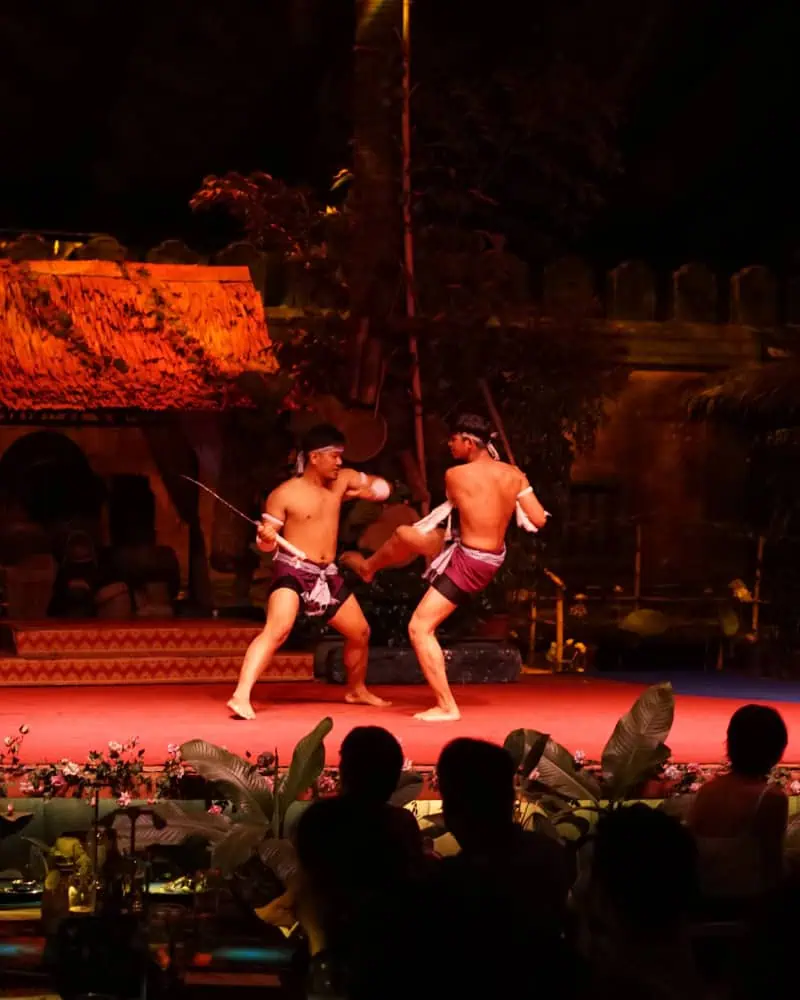
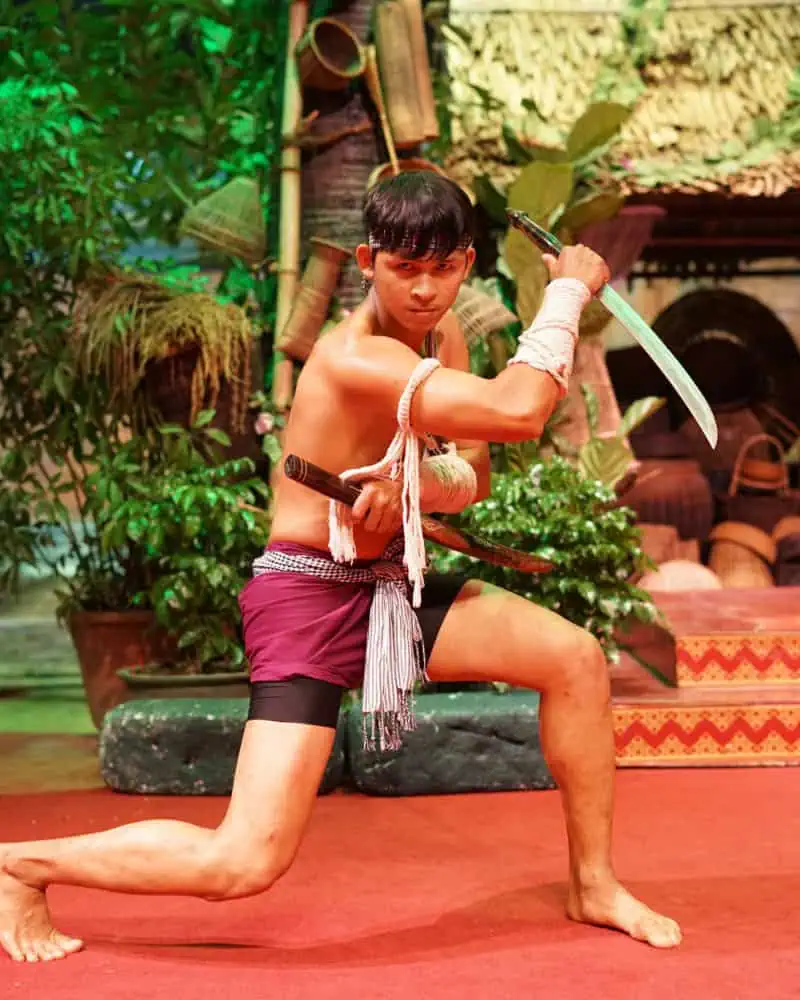
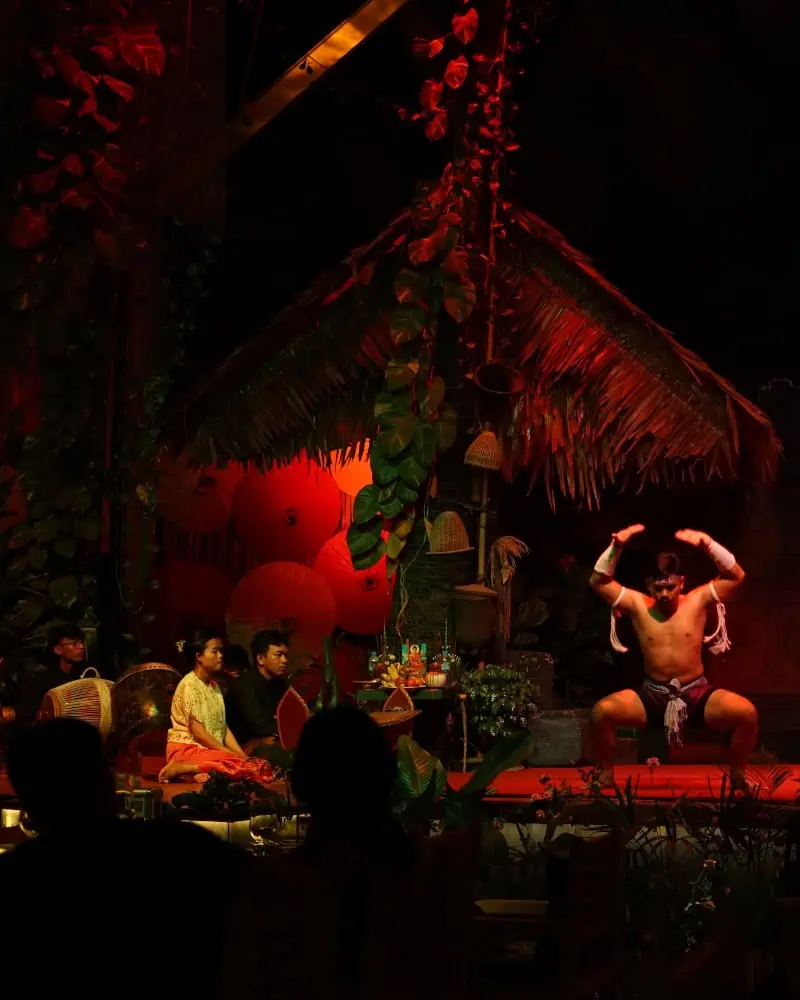
Bokator Interlude
Long stick fighting martial arts style for protecting the village.
Bokator Demonstration
Experimental martial arts trails that have been learnt back in the day.
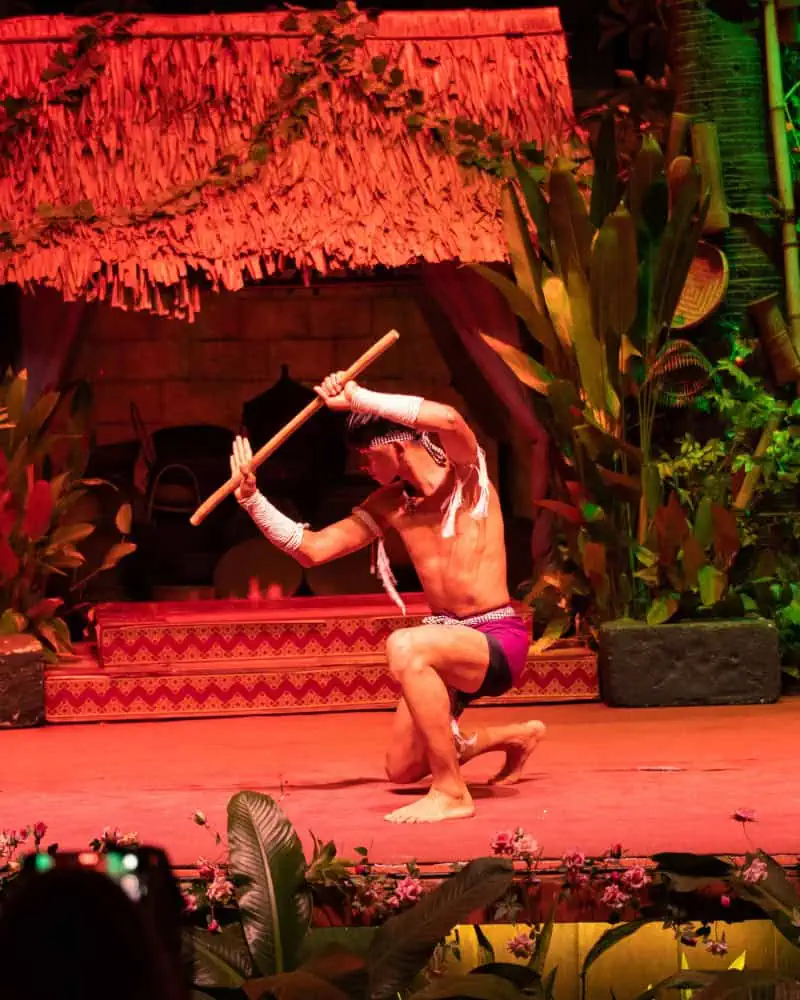
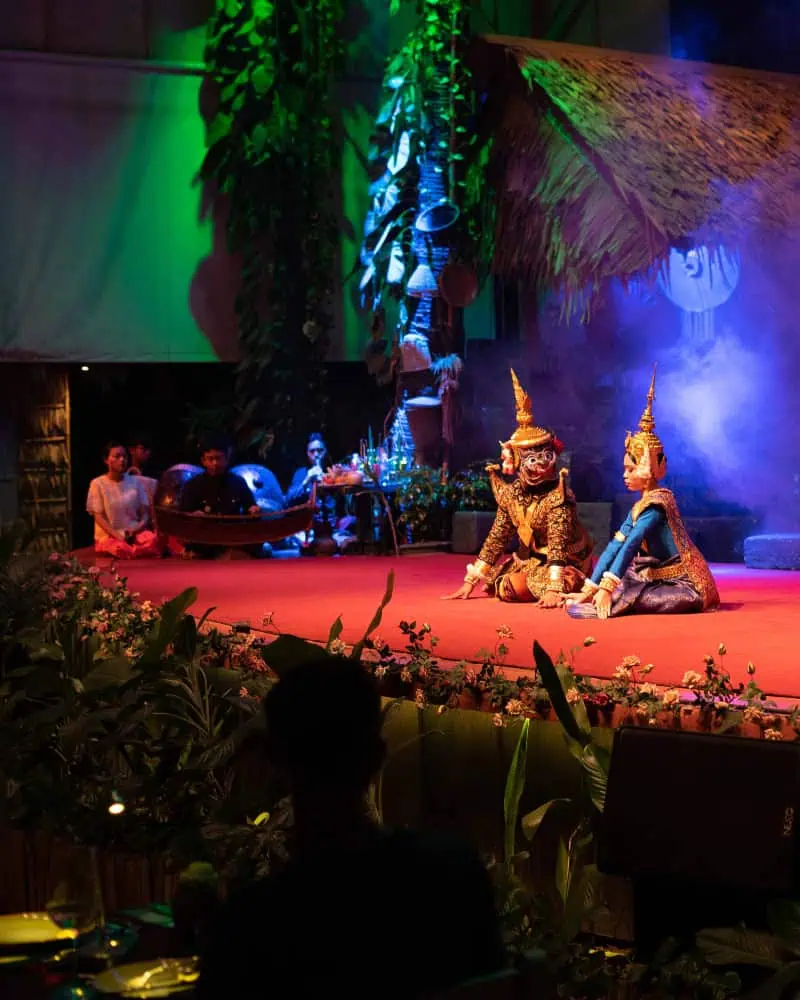
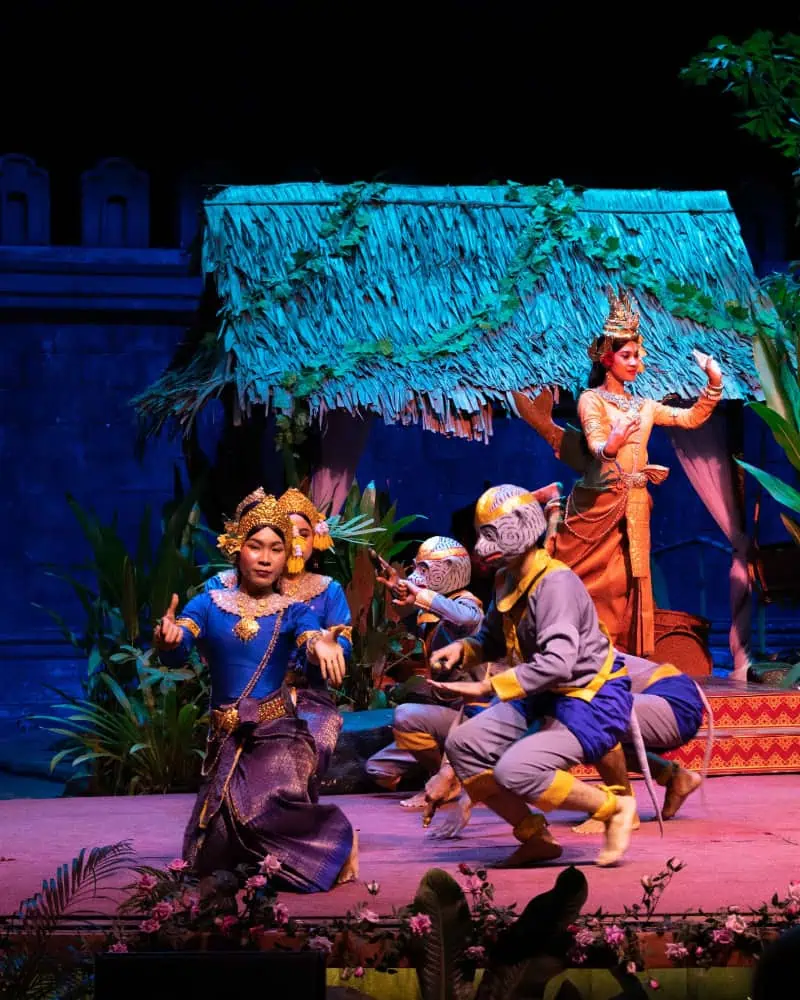
Sovann Machhar Dance and Hanuman (the monkey)
During the war between Rama and Krong Reap, Hanuman had the mission to build a bridge to Langka. But when he arrived there, the stones for using to build the bridge disappeared.
Hanuman later found out that Sovann Machhar had hidden the stones and they started a war. Later on, Hanuman and Sovann Machhar fell in love and then the peace was back.
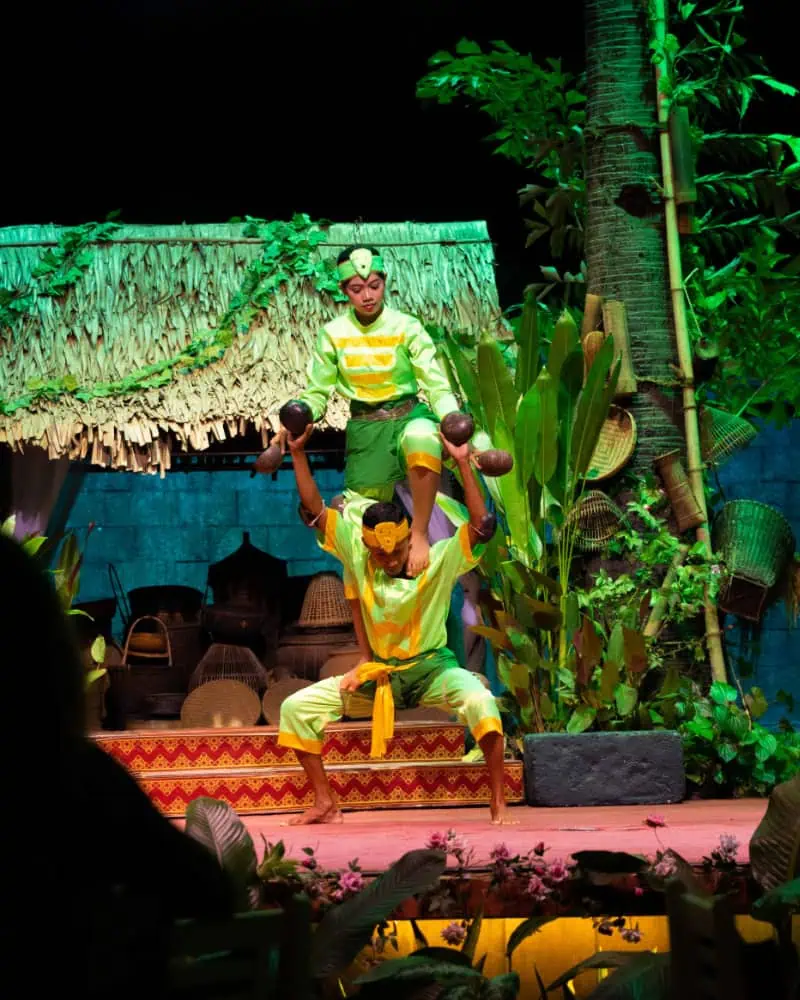
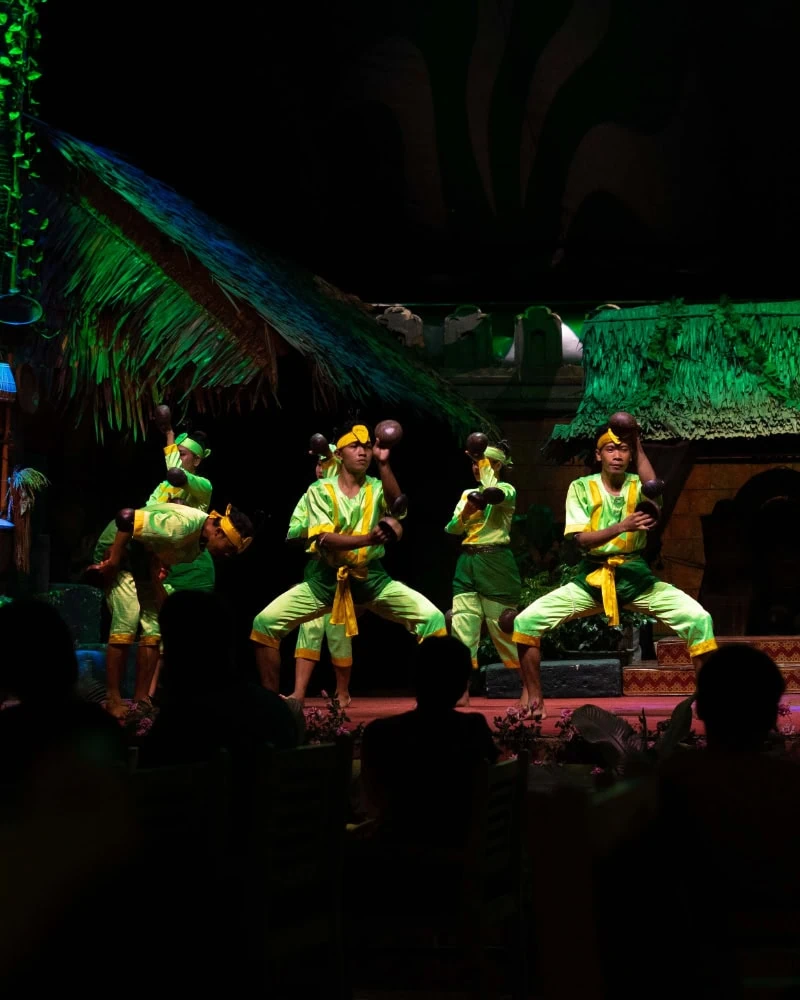
Kondob Boksrov (grasshopper Dance)
Kandob Boksrov dance take its roots in the rice field and Cambodian countryside. It represents the beauty of nature that amazes the farmers everyday while working in the rice field & observing the beautiful landscape.
All dancers wear costumes, made partially with
coconut shells that represent the Grasshopper, which can often be found in the fields. This dance pays its tribute to the beautiful nature.
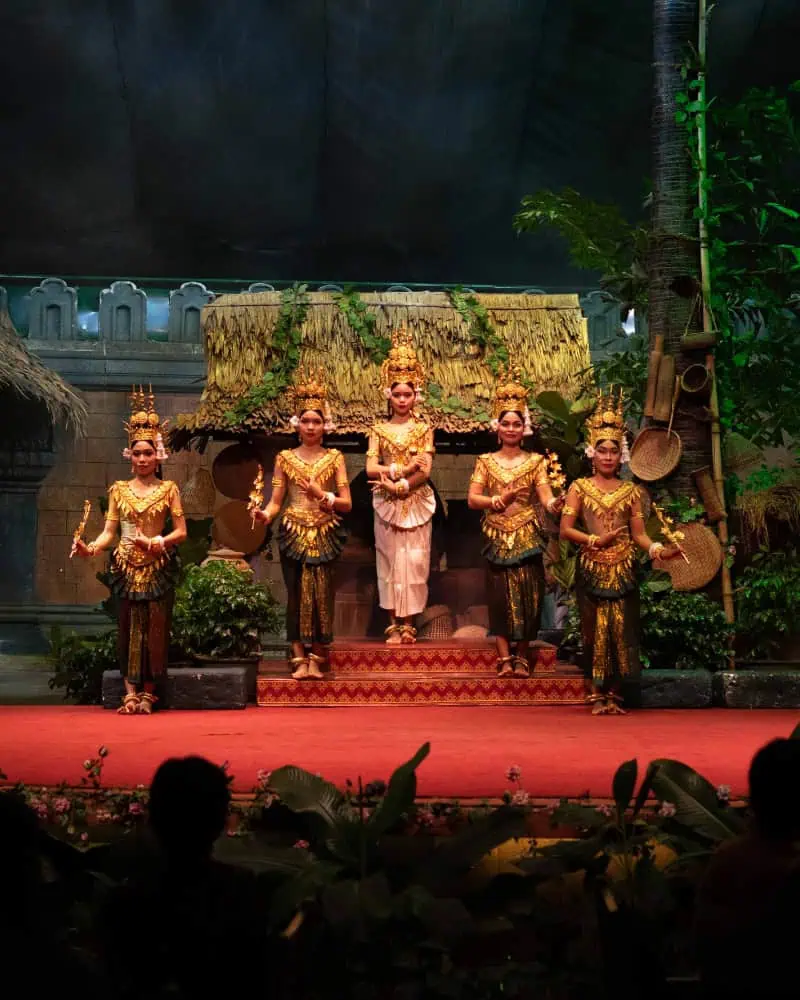
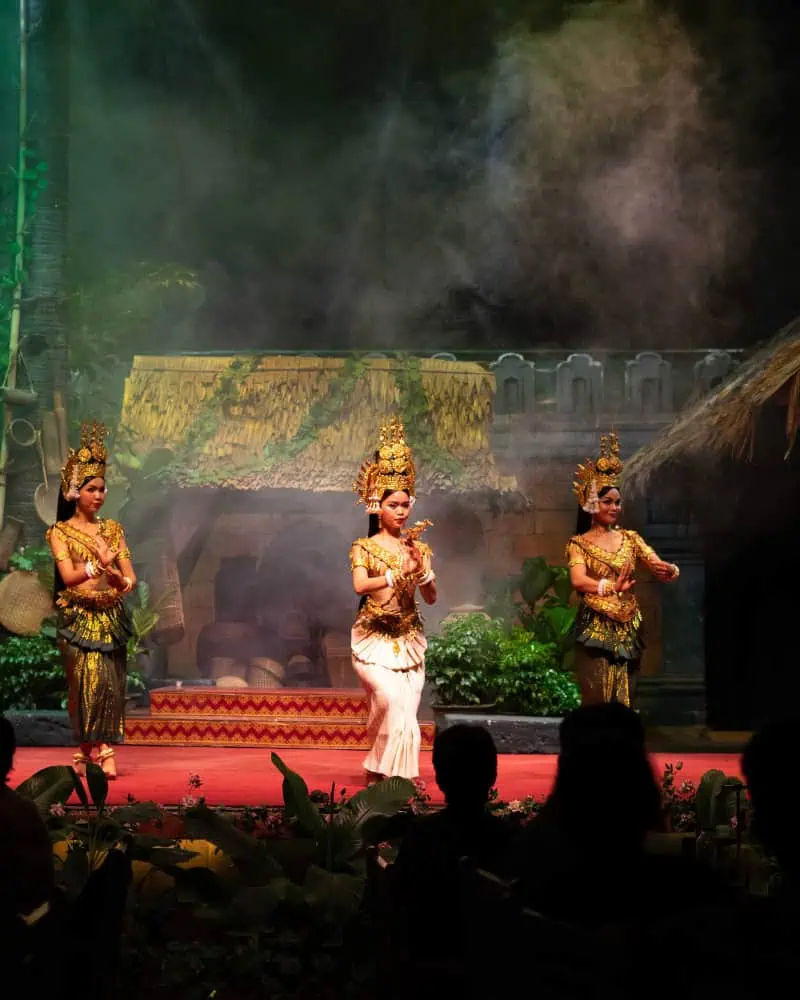
The Final Apsara Dance, the Blessing Dance
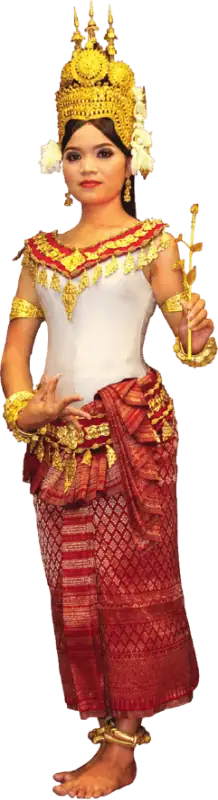
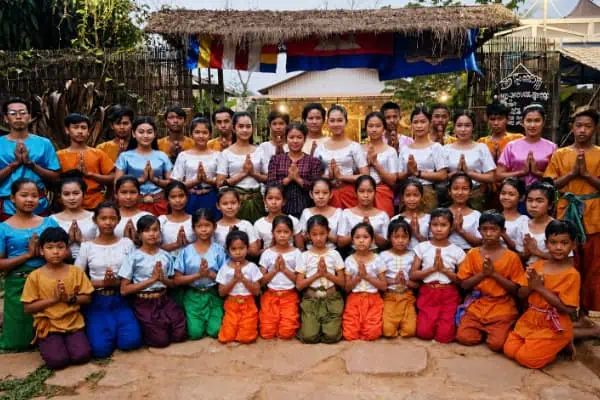
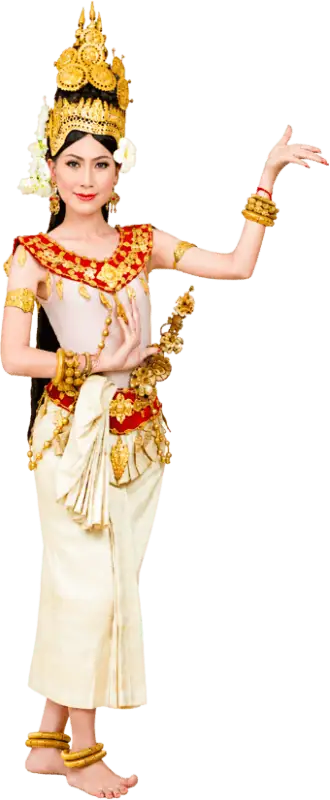
For Cambodian people, kingdom and values are defined by Pleasant, Politeness and Honesty. The dancers wear Classical Khmer Royal Ballet costumes that represent angels (Devata).
The blessing dance has been created by Her Majesty the Queen Sisowath Kosamak Nearyrath to illustrate what define Khmer values by blessing the audience in a beautiful dance.
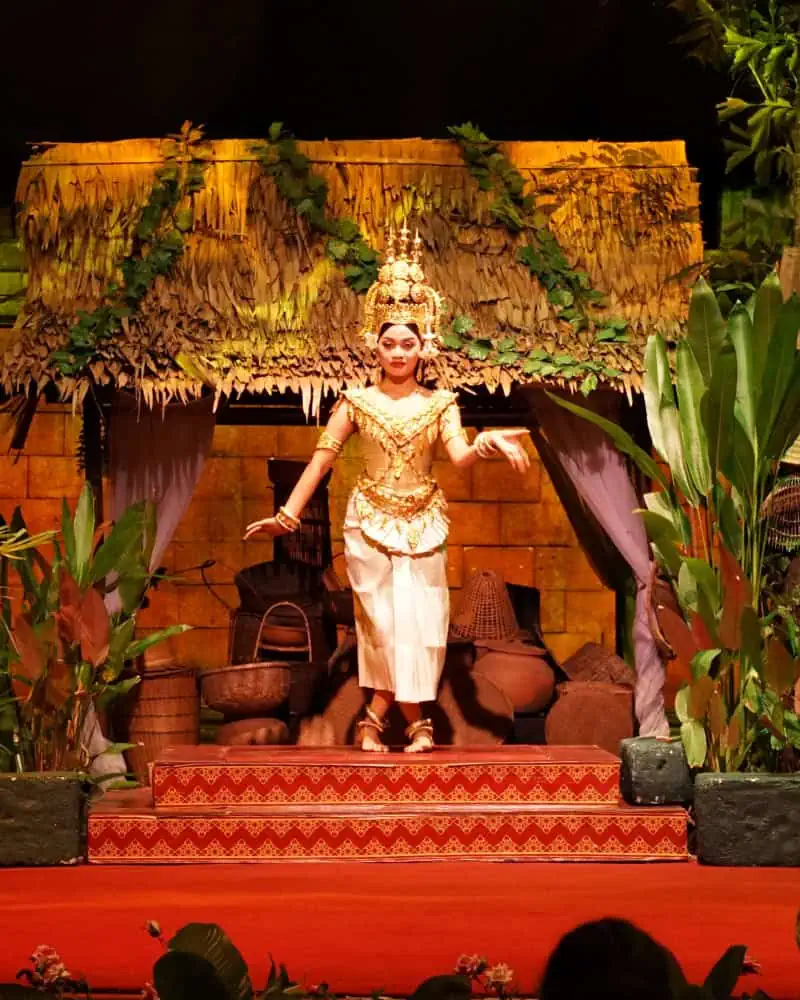
Explore the Apsara Attire
Leader
Korng Rak
Kantrom
Korng Gnor
Sanlek
Sangva
Skirt (Sbai)
Charabob
Korng Toing Chhuk
Subordinate